
Designing for End-of-Life in Soil: A Technical Look at Soil-Biodegradable Plastics for Agriculture
Soil-Biodegradable Plastics for Agriculture
Why “biodegradable” is not one property, how soil biodegradability is tested and certified, and where it makes engineering and economic sense.
Agriculture is one of the few sectors where plastics are deliberately placed into the open environment. Mulch films, plant clips, binding twines, tree guards and growth sleeves all improve productivity, conserve water and protect crops. Yet many of these products end their service life in, or on, the soil, where collection is slow, costly and often incomplete. This raises a design question that conventional polymers cannot answer:
If a product cannot be reliably retrieved, can its end-of-life be engineered into the material itself?
Soil-biodegradable plastics are designed to do exactly that: to perform for a defined service life, then be mineralised by soil microorganisms into CO₂, water and biomass, without leaving persistent microplastics.
1. “Biodegradable” Is Environment-Specific
Biodegradation is not an intrinsic, universal property of a polymer. It is a function of the material and the environment it ends up in. A given material may be:
- Industrially compostable: biodegrades at elevated temperatures (~58 °C) in managed composting facilities
- Home compostable: biodegrades at ambient temperatures in a domestic compost heap
- Soil biodegradable: biodegrades in soil at ambient temperatures, without a composting step
- Biodegradable in other specific environments, such as fresh water or marine conditions
An industrially compostable film offers no assurance of performance when tilled into a field at 20–25 °C. For an agricultural mulch film intended to be ploughed in after harvest, the relevant engineering requirement is:
Does the material biodegrade in the soil where it is actually used?
SKYi FKuR’s Bio-Flex® soil-degradable grades are developed specifically for this end-of-life scenario in agriculture, horticulture and forestry.
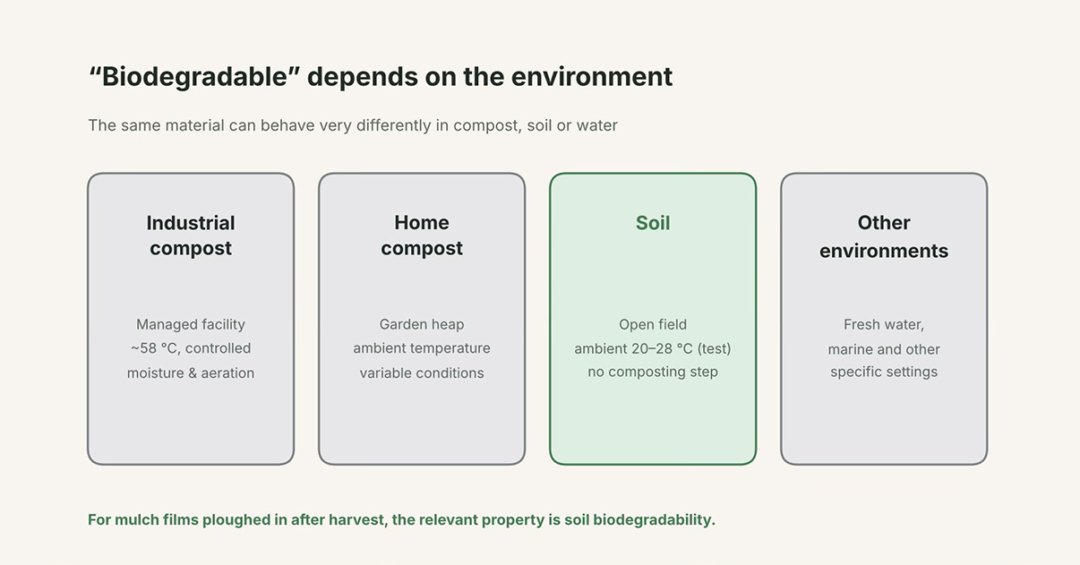
Biodegradability depends on the environment
2. The Problem Statement: Why Retrieval Fails
Recovery of agricultural plastics is technically and economically difficult:
- Contamination: Used mulch films carry substantial soil and plant residue, which raises cleaning costs and lowers recyclate quality.
- Fragmentation: Thin films tear during removal, leaving fragments in the field.
- Small-format components: Plant clips, ties and labels are dispersed and labour-intensive to recover.
- Remote placement: Tree guards and sleeves in forestry are frequently left in place because collection is impractical.
Where retrieval is incomplete, conventional polyolefins persist and fragment. Soil-biodegradable materials target precisely these use cases, offering:
- No separate retrieval step
- Lower agricultural plastic waste and lower collection labour
- Partly bio-based content in some grades (e.g., 10% bio-based carbon in Bio-Flex® FX 1135)
- Biodegradation in the same environment where the product is used
3. The Bio-Flex® Portfolio for Agricultural Applications
Bio-Flex® is FKuR’s family of biodegradable bioplastic compounds. It includes industrially compostable, home-compostable and soil-degradable grades, all designed to run on conventional extrusion and injection-moulding equipment. The soil-degradable grades for agriculture, horticulture and forestry include:
- Bio-Flex® FX 1135: Certified soil-degradable compound (TÜV Austria OK biodegradable SOIL) for mulch films and agricultural films. Processed by blown-film extrusion, with film thicknesses down to 8 µm. Contains 10% bio-based carbon (ASTM D6866).
- Bio-Flex® N 21310: Soil-degradable grade for agricultural films, with balanced mechanical properties.
- Bio-Flex® N 31310: Soil-degradable grade with high puncture and tear resistance, aimed at agricultural films and plant labels. Certification in process.
- Bio-Flex® N 25370: Certified soil-degradable grade (TÜV Austria OK biodegradable SOIL) with high density and excellent flexibility, for injection moulding and profile extrusion. Developed for tree guards and growth sleeves in forestry and agriculture.
- Bio-Flex® N 45261: Grade for clips, plant stakes and pots.
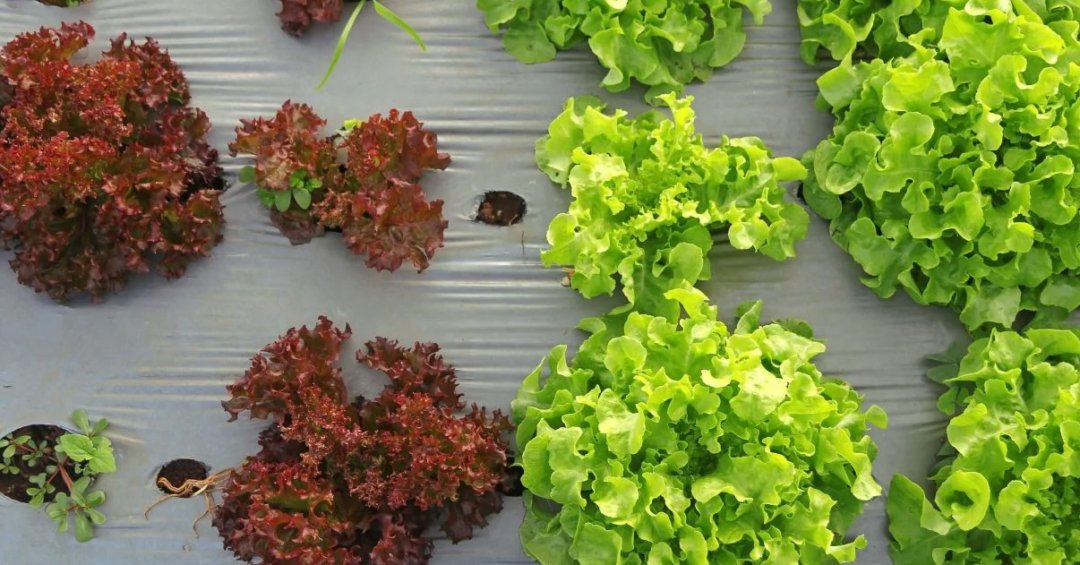
Image Credit: FKuR Kunststoff GmbH
According to FKuR, all Bio-Flex® N grades degrade in soil without leaving residue and do not produce persistent microplastics. This makes them suited to products that remain in nature after use or cannot be collected again.
4. What Actually Happens in the Soil
A common misconception is that “biodegradable” means a plastic simply disappears. Visual disappearance is not the criterion. The criterion is mineralisation: conversion of the polymer’s organic carbon by microorganisms.
Polymer + O₂ → (microbial action) → CO₂ + H₂O + Biomass
The process typically proceeds in two stages:
- Depolymerisation: extracellular enzymes from soil bacteria and fungi break polymer chains into oligomers and monomers.
- Assimilation and mineralisation: these low-molecular-weight fragments are taken up by microorganisms and metabolised into CO₂, water and new biomass.
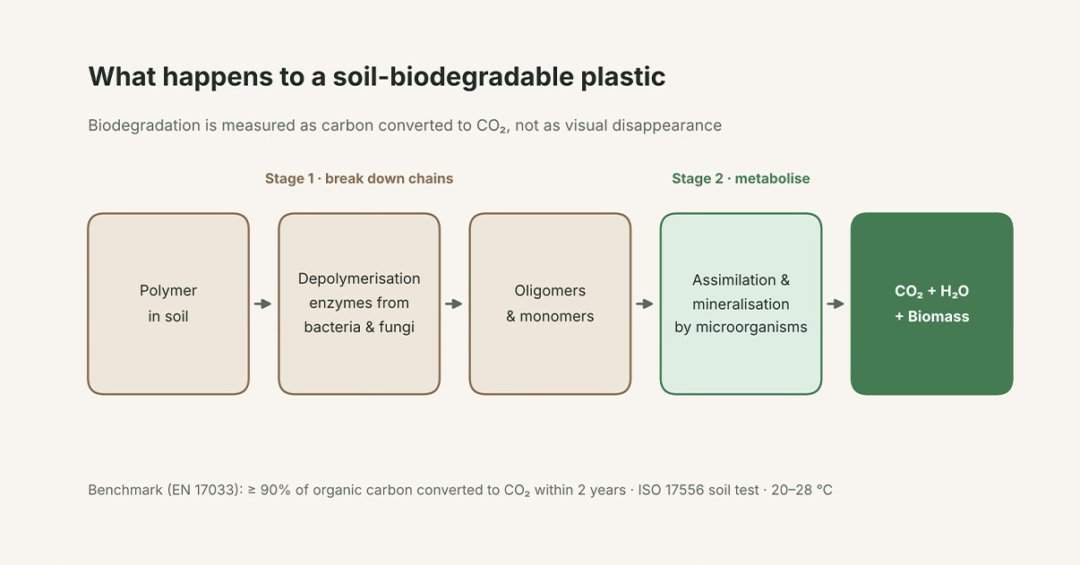
Two-stage biodegradation of a soil-biodegradable plastic
Soil-biodegradability standards set a quantitative threshold. For example, EN 17033, the European standard for biodegradable mulch films, requires at least 90% conversion of the material’s organic carbon into CO₂ within a maximum of two years. The test is run in standardised soil at 20–28 °C following ISO 17556. Because carbon is tracked all the way to CO₂, rather than to visual disappearance, this approach addresses the question of persistent microplastics directly.
5. Certification: Turning a Claim into a Specification
The word “biodegradable” on its own is not a technical claim. For commercial use, it must be tied to a defined test method, pass criteria and an independent certification.
Bio-Flex® FX 1135 and Bio-Flex® N 25370 carry TÜV Austria’s OK biodegradable SOIL certification, and certification of further N-series grades is in progress. The OK biodegradable SOIL scheme assesses three things:
- Biodegradation: chemical breakdown of the polymer in soil
- Ecotoxicity: no negative effect on plant growth
- Heavy metals: content within defined limits
For agricultural mulch films specifically, EN 17033 is the dedicated European standard. It combines soil biodegradation, ecotoxicity (plants, earthworms, soil microorganisms), composition limits and film performance requirements such as tensile strength and light transmission.
When specifying a product, always check which certificate applies to the exact grade, and whether it covers the granulate or the finished product.
Certification replaces a generic “eco-friendly” message with a verifiable, auditable specification.
6. Service Life First, Biodegradation Second
Soil biodegradability does not mean uncontrolled degradation. The product must first do its job:
A mulch film must retain its mechanical and barrier function for the full crop cycle to deliver weed suppression, moisture retention and soil-temperature benefits.
- A plant clip must hold sufficient mechanical integrity for as long as the plant needs support.
- A tree guard must protect the sapling through its critical establishment phase.
Formulation is what controls this balance. FKuR notes that the good moisture resistance of Bio-Flex® keeps mulch film from breaking down too quickly while it covers the field.
Only after the useful service life should biodegradation become the dominant process. Real-world biodegradation rates depend on several interacting variables:
- Material: polymer composition and formulation
- Product design: wall thickness and film gauge
- Soil: moisture, oxygen availability, nutrient content and microbial activity
- Climate: temperature profile and seasonal conditions
This is why application-specific material selection and field validation are essential. There is no single “biodegradable plastic” that suits every crop, climate and soil.
7. Application Map
Agriculture
Mulch films
Plant labels
Binding materials
Crop-support components
Forestry
Tree guards
Growth sleeves
Tree protection products
Horticulture
Plant clips
Growing aids
Tying and support products
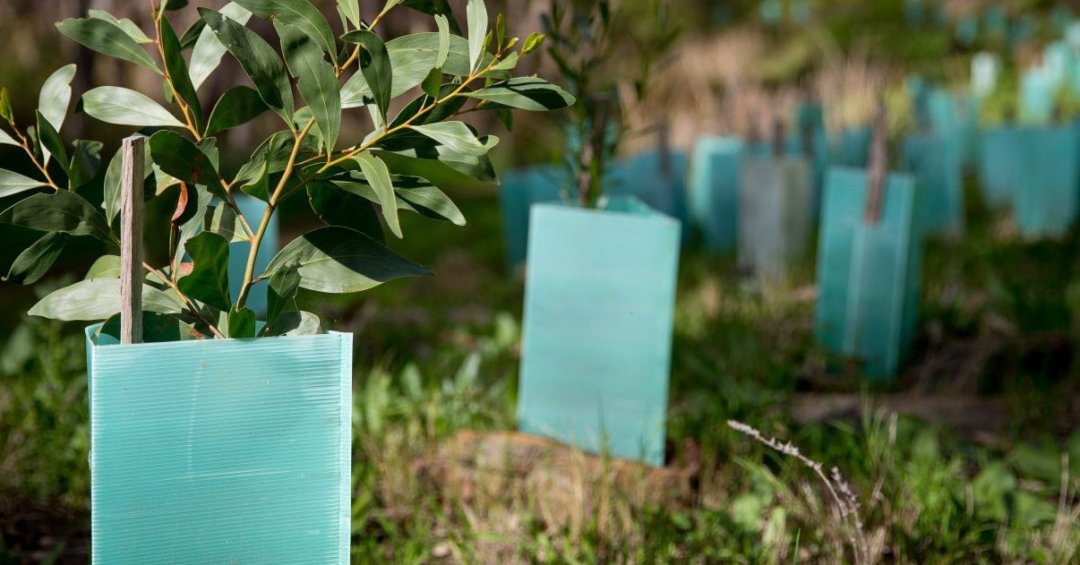
Image Credit: FKuR Kunststoff GmbH
8. The Economics of End-of-Life
Sustainability must work economically to scale. With conventional agricultural films, the end-of-life chain is long and costly:
Use → Collect → Clean → Transport → Recycle / Dispose
For suitable applications, soil-biodegradable materials shorten the pathway to:
Use → Incorporate into soil → Biodegrade
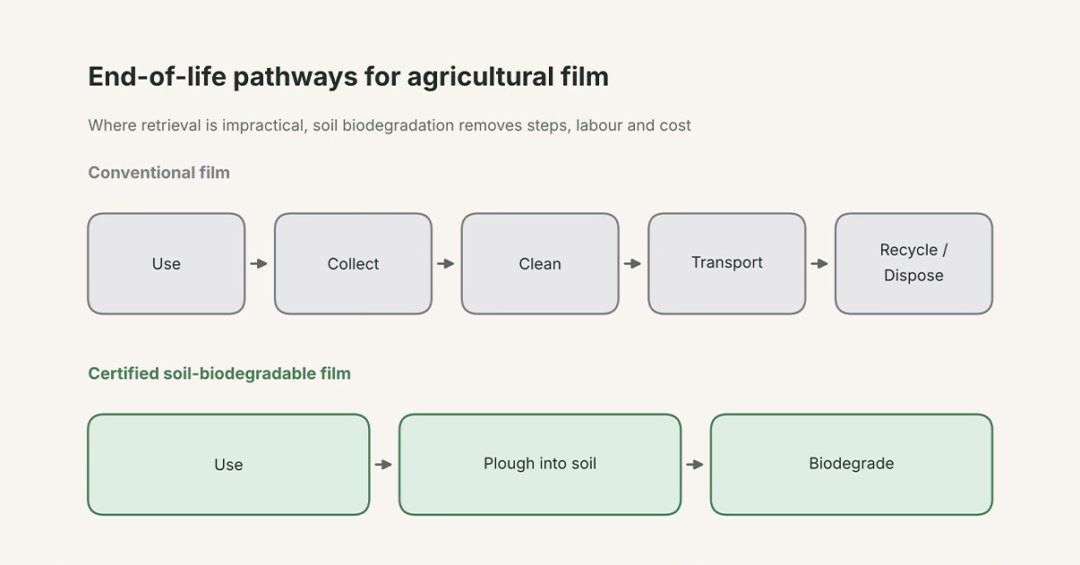
End-of-life pathways for agricultural film
The comparison should therefore be made on total cost of ownership, not resin price alone: removal labour, transport, cleaning and disposal or landfill fees all count. The outcome depends on the product, its certification, local farming practice and regulation, and needs to be evaluated case by case.
9. Positioning Within a Circular Strategy
Soil biodegradability is not a licence for “single-use without responsibility”. The guiding principle is to match the material to its realistic end-of-life pathway:
- Make → Use → Dispose is the linear model the industry is moving away from.
- Make → Use → Recover → Recycle → Reuse is the circular model, preferred wherever collection and recycling are efficient.
- Make → Use → Biodegrade → Return carbon to the biological cycle is the soil-biodegradable pathway, suited to applications where physical recovery is impractical.
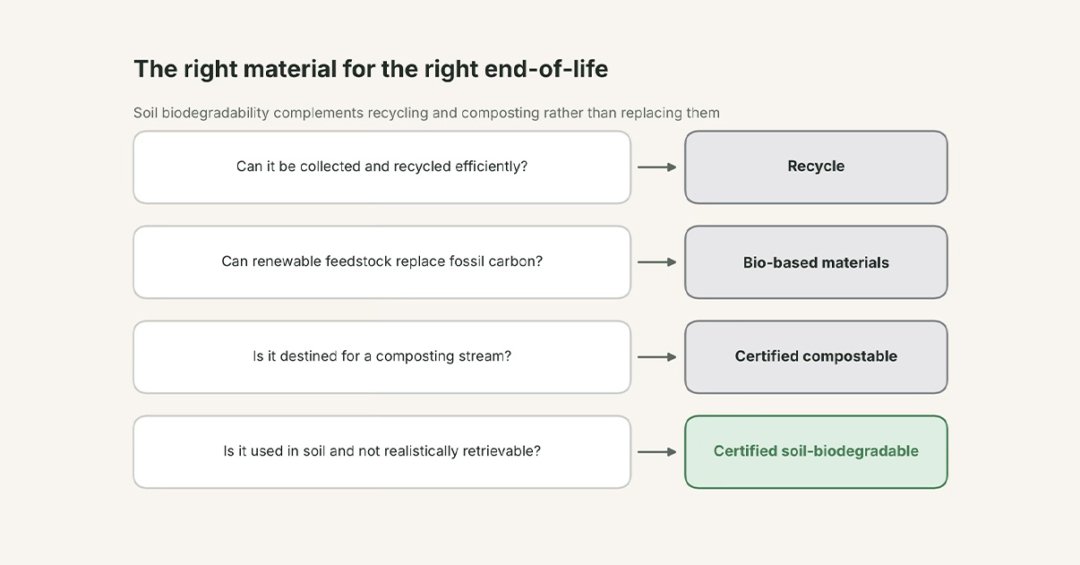
Matching material to end-of-life
If a product can be efficiently collected and recycled, recycling may be the better choice. But for a small component that is practically impossible to retrieve from soil, designing for certified soil biodegradability is the more rational engineering decision. Used this way, soil-biodegradable plastics complement mechanical recycling and compostable materials rather than competing with them.
10. The Opportunity for India
India’s large and diverse agricultural base, spanning row crops, plantations, horticulture, nurseries and forestry, offers significant scope for soil-biodegradable materials:
- Mulch films
- Nursery products
- Plant clips
- Tree protection
- Horticultural products
- Agricultural twines and support materials
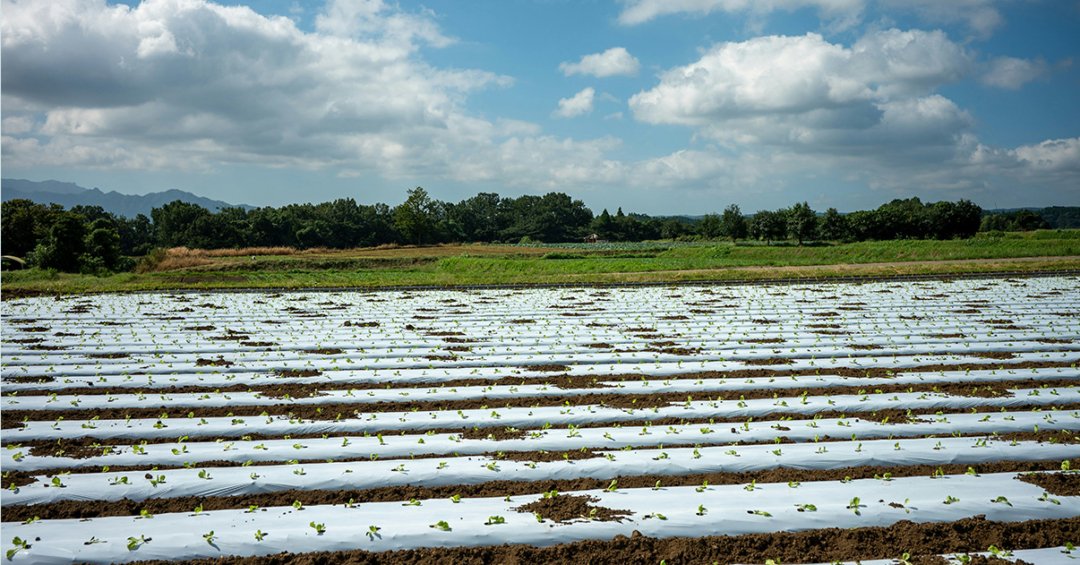
Photo by Kouji Tsuru on Unsplash
The goal is not simply to swap conventional plastic for biodegradable plastic. It is to identify the points in the value chain where collection is difficult, recycling is impractical, and soil biodegradation delivers a genuine lifecycle advantage. That is where material science creates measurable value.
11. An Application-Led Selection Framework
SKYi FKuR Biopolymers Pvt. Ltd., Pune, is FKuR’s local contact for India, providing access to the Bio-Flex® portfolio and FKuR’s application expertise.
Grade selection follows a structured, application-led sequence:
Application → Processing technology → Required mechanical performance → Service life → Soil and climatic conditions → End-of-life requirements
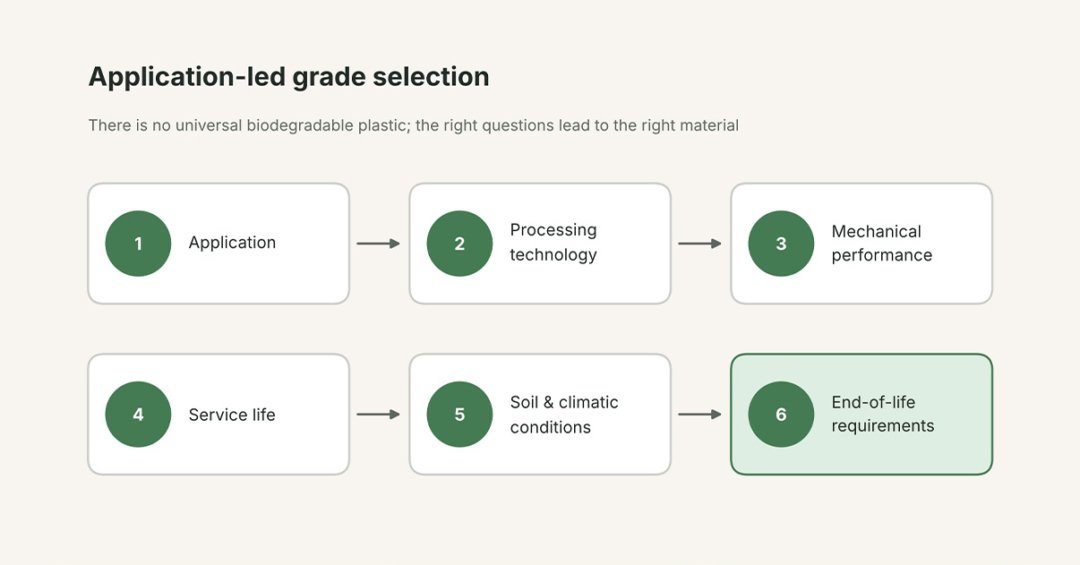
Application-led grade selection
The right material comes from the right questions, because there are different materials for different environments and different jobs.
Conclusion: The Right Material for the Right Application
Sustainable agriculture will not be achieved by eliminating plastics altogether, but by engineering each application for its realistic end-of-life:
- Where plastics can be collected and recycled, recycle them.
- Where renewable feedstocks can replace fossil carbon, use bio-based materials.
- Where products are destined for composting, use certified compostable materials.
- Where products are used in soil and cannot realistically be retrieved, soil-biodegradable plastics offer a compelling, certifiable alternative.
Sometimes the most sustainable plastic is not the one that lasts forever.
Exploring soil-biodegradable materials for your application? Connect with SKYi FKuR Biopolymers to discuss Bio-Flex® grades for agricultural, horticultural and forestry applications.
Explore the FKuR bioplastics portfolio: https://fkur.com/en/bioplastics/
Technical note: Suitability, certification status and biodegradation performance must be evaluated for the specific grade, product design, thickness, processing method, soil environment and intended application.